

It’s often said that e-commerce has changed consumer expectations. In truth, it’s done more than that. It has changed the way shoppers behave, including when they shop in store.
People now head into shops having already researched what they want to buy. A lot of the time, they’ve made their purchase decision before they even walk through the door.
This fundamentally changes what customers want from the in-store experience. In the past, shops were where people browsed, discovered and then decided what to buy. This still happens. But for the shopper who already knows what they want, they don’t need shelves packed with product choices. They want speed and convenience. They want to find what they’ve come for, give it a last check in person, and pay for it, all as seamlessly as possible.
This describes what we might call the “post-ecommerce” shopper. Their shopping behaviours freely blend digital and physical channels. But their expectations are very much formed online. They demand choice. They demand convenience. They demand low friction. This has consequences for how retailers use physical space.
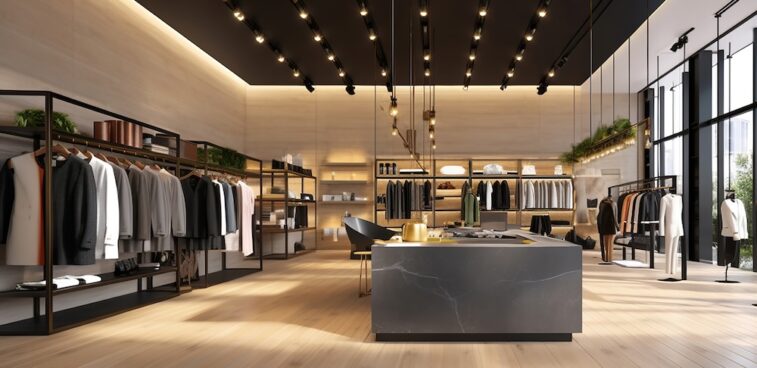
Retailers face a challenge. The customer looking to grab what they came for as conveniently and efficiently as possible doesn’t want crowded aisles and cluttered shelves. That just gets in the way. They instead want open spaces, clear layouts and carefully curated product selections that make finding items as easy as possible.
But space is at a premium in modern retail. Every square foot is a cost burden. Dead space is wasted money. A lot of smaller retailers operate in tight premises precisely to keep rental costs under control.
So there’s a tricky balancing act to be struck. How to create layouts that allow for easy movement flows and product discovery within a limited footprint. Just like over-crowded shelves, bottlenecks and queues are anathema to the modern customer that just wants to get in and get out. And that’s why point of sale has to be a core consideration within wider store designs.
In the past, POS could often dictate store layouts. The priority was to have enough checkout points to keep queues to a minimum even at peak times. POS terminals of old were often chunky. They’d needed units to house the hardware and wiring. They took up precious store real estate. And everything else would have to be designed around where they could fit.
With fewer shoppers spending extended periods on product discovery and decision-making in store these days, a faster flow of customers means queue management is less of a priority than it once was. Speed and convenience of transactions is at least equally important. That pushes retailers to think about where they locate POS, the form it takes, and how it impacts on the wider space.
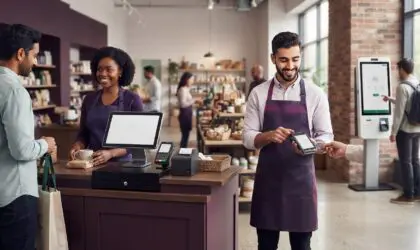
From a technology perspective, POS has moved with the times. Gone are the days of boxy, hardware-heavy POS terminals. Sleek, compact, small footprint designs are now standard. Added to that is flexibility. Our modular POS units like the Oxhoo Noom and Oxhoo EVOQ Modular are built for maximum versatility, with table and wall-mount options and, in the case of the Noom, the ability to fold the unit up to make space on demand. Our latest product, the Oxhoo Zenio, can function as either a POS endpoint or a kiosk.
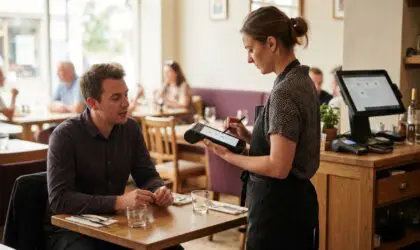
Flexible deployment does a lot more than just reduce the amount of space POS hardware takes up. It gives retailers the freedom to locate POS where it makes most sense to serve customer needs and support operational flows. Rather than POS dictating store layout, POS can now slot into the bigger picture. You can add to that the use of kiosks to increase the service options available to customers. Or, for the ultimate in space-saving, flexible POS, using mobile tablets carried by staff, taking POS wherever it is needed moment to moment.
In this way, POS becomes a strategic enabler in creating the kind of convenient, user-friendly spaces today’s post-ecommerce consumers expect. It’s no longer just about managing transaction volumes. It’s about creating the kind of experiences, through agile service and efficient flows, that keep customers coming back again and again.