

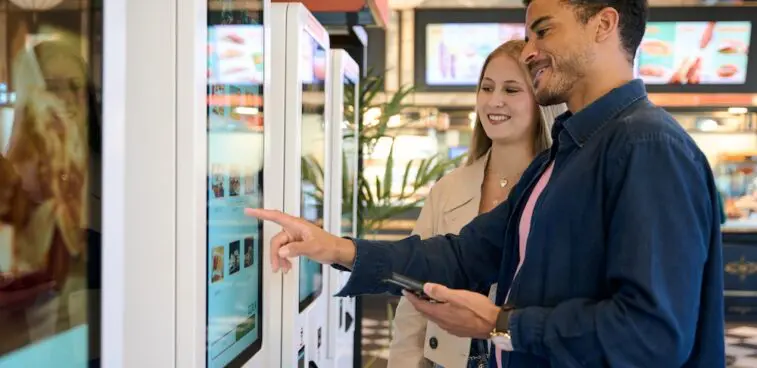

The QSR sector trades on speed. It’s there in the name – quick service, fast food. It’s what customers expect. And satisfaction in QSR restaurants is tightly tied to speed of service.
But it’s not all that matters. Something the findings of a new industry report from the US serve as a timely reminder of.
The Intouch Insight QSR On-Premises Report 2026 analyses the in-person counter-ordering experience at 10 leading QSR chains – including the likes of Burger King, Subway, Dunkin’ and Popeyes. It measures a wide range of metrics covering order accuracy, service levels and customer satisfaction.
The headline findings make for very interesting reading. On the one hand, QSRs are serving customers faster than ever. In fact, the report found that they had shaved a full minute off average order times in the space of just a year – down from 5:03 minutes in 2025, to 4:03 minutes this year. That’s a clear indication that QSRs are really pushing the envelope on efficiency. And it’s great news for throughput.
However, the survey data also revealed a strange contradiction. Despite measured service speeds improving significantly, customer satisfaction with speed of service actually fell, from 93% last year to 87.9% this.
Customer feedback confirmed that order speed was the number one criteria people judge the QSR experience on. But the survey also found that there is a gap between perceived order speeds and actual speeds. And when customers feel orders are slower than they expect, satisfaction plummets – from 96.7% when they feel orders match their expectations, to 76.9% when they don’t.
But why would customers feel service is slower than it actually is? The fascinating insight from the report is that it boils down to how QSRs are going about speeding up service – and in particular the role technology at the expense of human elements.
There’s no doubt that the tools available to restaurant operators to drive speed and efficiency are better than ever. From ultra-slick ordering kiosks to advanced kitchen management systems that optimise order preparation, tech is central to speeding up service and increasing throughput.
Especially now that AI has taken up the baton of tech-driven efficiency gains – conversational interfaces, automated up-sell recommendations, correcting errors quietly in the background – there is a payoff for greater speed. Service might be fast, but it feels robotic and increasingly transactional. The Intouch Insight study found clear evidence that QSR customers are missing the human touch. And that is serving to increase perceived wait times. Because, when it all feels automated and maybe even a little too perfect, the experience is boring and sterile.
Yes, the whole point of QSR is you order your burger and fries and get your meal with minimum delay. But that doesn’t have to come at the expense of human contact. The survey found that a quarter of interactions across the 10 brands involved saw customers not receive a greeting, a thank you or a parting remark.
So the takeaway seems to be that it’s not always about pursuing a particular business objective. It’s how you go about it. By pushing the envelope on ordering speeds in a purely transactional, tech-driven way, QSRs can tick the box on efficiency and throughput. But if that comes at the expense of the human side of service – even very little things like greetings and courtesy – you risk harming customer satisfaction.
It might not be a case of slowing down. But more of remembering that speed lies in the eyes of the beholder.
OXHOO provides innovative EPOS, self-service kiosk and digital ordering solutions designed specifically for fast-paced hospitality environments. Speak to our team today and discover how the right technology can help your restaurant serve more customers, reduce pressure on staff, and increase profitability.