

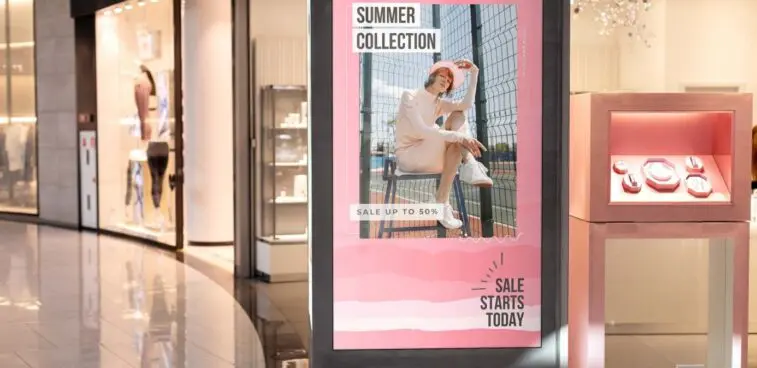

In this previous blog, we made the case for why LED panels represent a bigger, brighter future for digital signage. With their flexible modular builds and direct light emission technology, direct view LED (dvLED) panels allow you to build screens any size and shape with exceptional definition to make the biggest impact indoors and out.
But installing LED panels is not the same as switching on a self-contained LCD screen. Bigger, brighter and more flexible they may be. But you don’t get those benefits straight out the box. Building an LED screen takes a little more planning and care. In particular, you have to get the placement and mounting right.
This is definitely an area where the expertise of a digital signage specialist like Oxhoo comes into its own. Here’s how our engineers can help make your first LED screen perfect.
The whole appeal of LED screens rests in their modularity. The fact that you can create giant screens to suit any space all comes down to piecing together individual panels. But it’s not just about size and flexibility. You also want to preserve visual quality wherever you locate your screen.
One major consideration is making the finished screen look like a seamless whole. That depends on very close alignment between the panels. Even small variations in the surface you are mounting on can be enough to create visible lines, shadows or distortions across the display.
The level of precision required makes a detailed site survey prior to installation an absolute must. Surfaces need to be checked for any irregularities so engineers can make the necessary adjustments to the height, depth and angle of individual panels.
It’s equally important to factor in where people will be viewing the screen from. Height, viewing angle and distance all impact what people see on the screen. Obviously, you’re going to have people viewing from different places and perhaps moving around. It’s important to make calculations based on different positions and anticipate where most people will be looking at the screen from so you can optimise accordingly.
Large dvLED installations can carry considerable weight, so engineers need to assess whether the wall, ceiling or supporting structure can handle the load and how that weight should be distributed. Neglecting that can lead to safety risks and potentially expensive remedial work further down the line.
The environment is another factor that needs to be taken into consideration. Changes in temperature and humidity can cause large structures to move slightly over time, while poor ventilation may allow heat to build up behind the panels. Mounting systems need to have a certain degree of flex in them and leave enough space for air to flow.
Cabling requires careful planning, too. Routes need to be tidy, accessible and protected from unnecessary strain, while also being tucked out of the way and secured so they don’t present trip and other hazards.
LED screens can make the world of difference to your shop, restaurant, hotel or event and entertainment venue. Installation is the part that brings the promise to life, so it deserves expert care and attention.
Get in touch with the Oxhoo team today to find out more.