
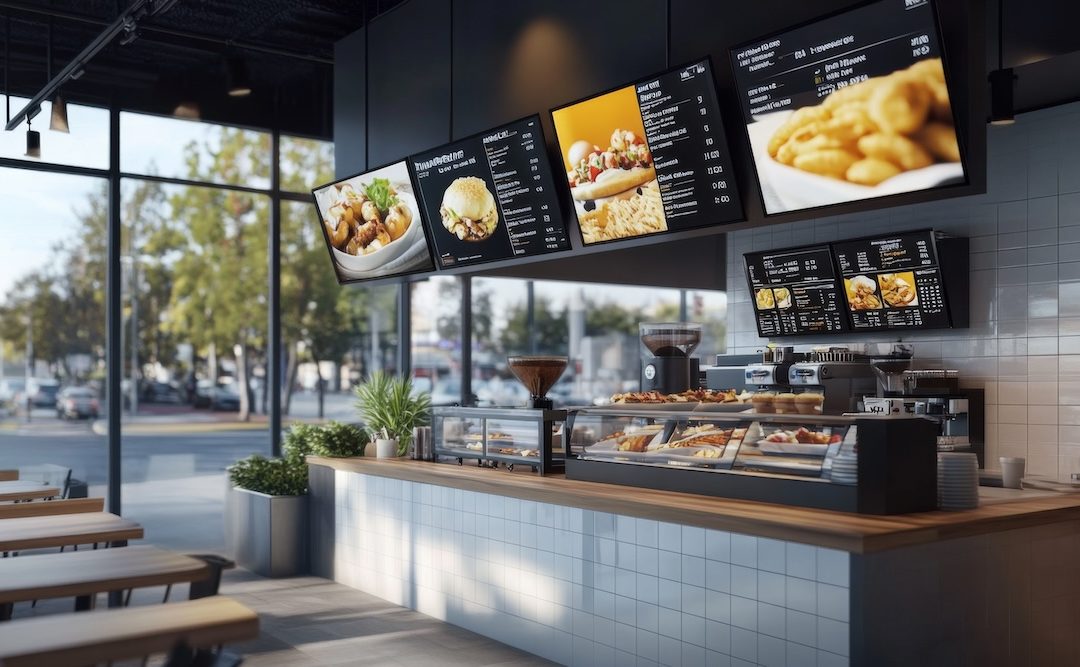
The Quick Service Restaurant (QSR) sector has had a long-running love affair with digital displays. Major chains began switching traditional behind-the-counter static lightbox menus for LED and LCD screens in the noughties, with their use near universal by the mid 2010s. And then, of course, there’s the touchscreen-inspired self-ordering revolution that has been credited with transforming the QSR customer experience and average order values.
But in recent years, we’ve entered a new phase in the adoption and use of digital signage in QSRs. It’s no longer just major chains rolling out digital menus. Some 82% of QSRs now use them.
The biggest shift has been in how digital signage is deployed within individual restaurants. It’s no longer just menus behind the counter. Digital signage is being rolled out right across premises and beyond, in window displays, even outside at curbside and at drive-thrus. It’s not unusual for single restaurants to have 10+ digital screens.
That’s driving huge demand for digital signage from the sector – globally, QSRs are thought to account for 20% of the total digital signage market. And there’s no suggestion of that demand slowing down. Three quarters of QSRs still rank digital signage as a top investment priority.
Here are four reasons why that’s the case.
Flexible messaging
Digital signage is a perfect match for the fast-paced, dynamic modern business environment. One of the biggest appeals to QSRs is that content isn’t static. Switching menus between breakfast, lunch and dinner is just a matter of setting up a simple automated software command. You can cycle between menus and promotions. And as ambient data capture and AI analytics evolve, QSRs are increasingly able to personalize what customers see.
QSRs are quickly learning how to make full use of this agility in sophisticated ways. Some operators are using digital signage to create what amounts to complete sales funnels – promotions and adverts on exterior displays to attract attention, strategically placed full menu boards to turn attention into a purchase consideration, then time-sensitive promotions close to point of sale to push conversion and increased orders. Research shows that time-sensitive offers can boost the frequency of purchases by up to 20%.
Expanded visibility
The digital signage funnel example above also highlights another benefit. QSRs aren’t waiting for customers to walk through their door before they can share bright, attractive product imagery and promotional messaging with them. They’re doing it from the very edge of their premises, with digital signage at curbside to attract passing trade.
This has coincided with the rapid growth of drive-thrus. Reports suggest that, for some, chains drive thrus now account for 70% of total transactions. Digital signage has had a transformative impact on the popularity of drive thrus, making menus easier to read in all conditions and allowing operators to attract custom with bright, engaging, dynamic messaging.
Keeping customers informed
QSRs are also using digital signage to improve the customer experience. One simple example is displaying live order wait times. In the past, customers were used to waiting for their order number to be called out. The difference in perception between not knowing when this is coming, and being able to track an order in real time is fascinating. Studies have shown that displays can reduce perceived wait times by up to 35%.
Screens are also ideal for sharing information beyond promotional messaging. Providing clear allergy advice is very important, and people are interested in nutritional details, where ingredients were sourced from etc more generally. It’s much easier to make this available on digital signage, particularly interactive displays where individuals can look up what they want to know, than adding it as small print on static signage or paper menus.
Increased revenue
Finally, the bottom line. QSRs are investing heavily in digital signage because it is good for business. And that is very clear in the impact it has on revenue. The numbers are compelling. More than 80% of QSRs report seeing an increase in orders after adopting digital signage. Some studies have linked digital menu boards to uplifts in sales volumes of up to 38%. As a result, more than 40% of QSRs get a full return on their investment in digital signage within 12 months.